The short answer
Most roof-mounted solar panel installations need scaffolding. Fitting panels means installers working on the roof for a sustained period, handling mounting rails, panels and cabling, which is work at height that cannot be done safely from ladders. A typical domestic install needs a scaffold to the relevant elevation, giving a working platform at eaves level with guard rails and edge protection so the installers can move panels onto the roof and work safely. The scaffold is usually priced separately from the solar system and is a minority share of the total cost, which is dominated by the panels, inverter and electrical work. The Work at Height Regulations 2005 apply, and a reputable installer will arrange suitable access. Ground-mounted systems are the exception, needing no roof scaffold.
Solar is a roof job, and roof jobs need safe access. Scaffolding is a near-standard part of a roof-mounted solar quote, and knowing why helps you read the costs.
Scaffolding for solar panels
- Roof-mounted installusually needs scaffolding
- Whysustained roof work handling panels
- Accessplatform + edge protection to the roof
- Cost shareminority of the solar project
- Ground-mountedno roof scaffold needed
Why a solar install needs a scaffold
Installing roof-mounted solar PV is a sustained roof job. The installers fix mounting brackets to the rafters, lay rails, lift and secure the panels, and run the DC cabling back into the building. That means people working on and around the roof for a period, repeatedly handling and positioning bulky panels — exactly the kind of sustained, material-heavy work at height that needs proper access.
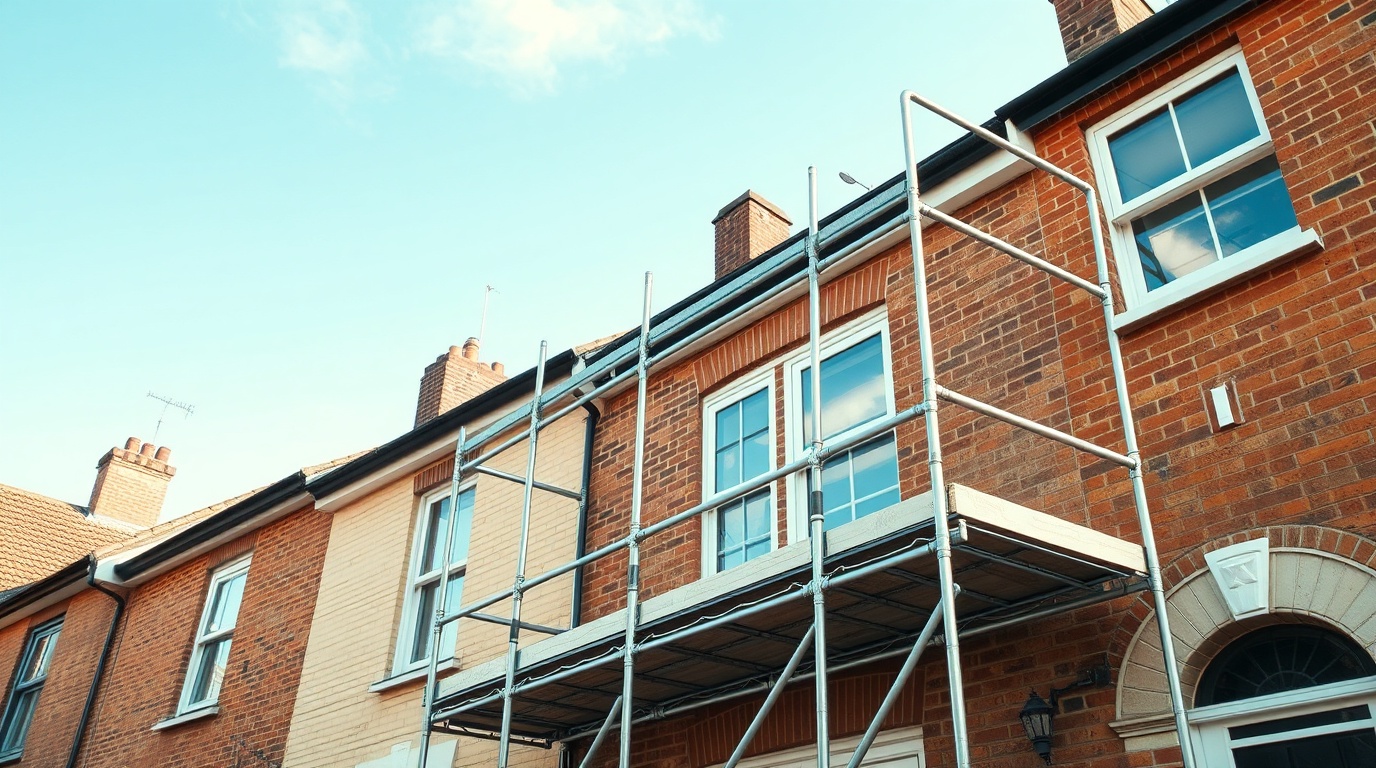
A scaffold to the relevant elevation provides this. It gives a stable working platform at eaves level with guard rails and edge protection, a safe route onto the roof, and a place to stage panels and equipment. Trying to install panels from ladders is unsafe and impractical: panels are awkward to carry, the work is sustained, and there is no fall protection. This is why scaffolding appears on almost every roof-mounted solar quote, and why a reputable installer treats it as essential.
What access the installers need
The exact scaffold depends on the property and the array, but the typical requirements are:
- A working platform at eaves level along the elevation where the panels go, with guard rails and toe boards.
- Edge protection so installers can work near the roof edge safely while fixing the lowest row of panels and the perimeter flashings.
- Safe access onto the roof from the platform, rather than repeated ladder trips with materials.
- Space to stage panels close to where they are fitted, reducing carrying.
For a straightforward single-elevation array on a two-storey house, this is a modest scaffold to one side. A larger array spread across multiple roof faces, or a taller or more complex roof, needs a correspondingly bigger structure. The installer or their scaffolder will assess what is required as part of the survey.
| Install type | Typical access | Notes |
|---|---|---|
| Single-elevation array | scaffold to one elevation | modest structure |
| Multi-face array | scaffold to several elevations | larger structure |
| Taller / complex roof | bigger scaffold | more height and lifts |
| Ground-mounted system | no roof scaffold | different access needs |
Indicative guidance only. The scaffold scales with the roof and the spread of the array.
How the scaffold fits into a solar quote
On a solar PV quote, the scaffold is normally a separate line from the system itself. Some installers include it within their overall price; others arrange it through a scaffolding sub-contractor and pass on the cost. It is worth seeing the scaffold identified, because it is distinct work with its own basis.
In proportion, the scaffold is a minority share of a solar project. The dominant costs are the panels, the inverter, the mounting system and the electrical installation, including the work to connect the system and any battery storage. The scaffold supports the roof work but is not the largest element. Because a domestic install is usually completed in a short period — often a day or a few days — the scaffold's included hire period comfortably covers it, so extra weekly fees rarely apply unless the install is delayed. Coordinating the scaffold and install dates keeps the access cost tight.
Safety, standards and the exceptions
Solar installation is work at height under the Work at Height Regulations 2005, and the duty to provide a safe place of work with fall protection applies fully. The scaffold should be erected by competent, trained scaffolders (the recognised UK scheme is CISRS) to a recognised standard, and inspected before use and at suitable intervals while in place. HSE guidance favours collective protection such as a guard-railed platform over personal measures.
The main exception is ground-mounted solar, which sits on frames at ground level and needs no roof scaffold, though it has its own groundworks. For roof-mounted systems, the scaffold is a standard, expected part of doing the job safely, not an avoidable extra. If a quote for roof-mounted panels omits scaffolding or proposes ladder-only access for the install, that is a warning sign rather than a saving — proper access is how the installers, and your roof, stay safe during the work.
Frequently asked questions
Do solar panel installers provide their own scaffolding?
Usually they arrange it, either including it in the overall price or through a scaffolding sub-contractor whose cost is passed on. It is worth checking the quote so you can see the scaffold identified. For roof-mounted solar it is a standard, expected part of the job, not an optional extra.
How long does the scaffold stay up for a solar install?
Usually only a short time. A domestic roof-mounted install is often completed in a day or a few days, which the scaffold's included hire period comfortably covers, so extra weekly fees rarely apply. Coordinating the scaffold and install dates keeps the access cost down.
Can solar panels be installed without scaffolding?
For roof-mounted systems, not safely. Installing panels is sustained work at height, handling bulky panels and cabling, which cannot be done from ladders. Ground-mounted systems are the exception, needing no roof scaffold. A reputable installer will arrange suitable access for a roof install, as the Work at Height Regulations 2005 require.
Sources & further reading
Figures on this page are typical UK ranges drawn from published sources and depend on your specific job. They are guidance, not a quotation.