The short answer
Yes — removing a chimney stack needs scaffolding. Taking down a stack means working at the highest point of the roof, dismantling brickwork by hand, lowering the materials safely, and then making good the roof where the stack stood. That is sustained, material-heavy work at height that cannot be done from ladders. It usually requires a full scaffold up to roof level with a chimney access platform at the top, and often a means of getting the brick and rubble down safely. The scaffold is the fall-protection and access system the job depends on, under the Work at Height Regulations 2005. Removing a chimney can also affect the building structurally and may need Building Regulations sign-off, so it is not purely a roofing task. Treat any figures as indicative and property-specific.
Chimney removal is one of the more involved roof jobs, combining demolition, roofing make-good and sometimes structural work — all at height. Scaffolding is the foundation that makes it safe.
Scaffolding for chimney removal
- Needed?Yes — full scaffold to roof level
- Whydemolition + make-good at height
- Pluschimney access platform, safe material drop
- Other considerationsstructural and Building Regulations
- Legal basisWork at Height Regulations 2005
Why chimney removal needs a scaffold
Removing a chimney stack is more involved than it looks. The work means reaching the highest point of the roof, dismantling the brickwork by hand course by course, lowering the bricks and rubble safely, and then repairing the roof where the stack came through — new rafters or trimming, battens, membrane, tiles or slates, and flashings to weather the patch.
All of that is sustained, material-heavy work at height, often at the very top of the roof. It cannot be done from ladders or a tower. A full scaffold to roof level with a chimney access platform at the top gives the stable working area, the guard rails and edge protection to prevent falls, and usually a safe way to lower the demolition materials. The scaffold is not optional — it is the access and fall-protection system the whole job is built around.
What the access involves
The scaffold for a chimney removal typically provides:
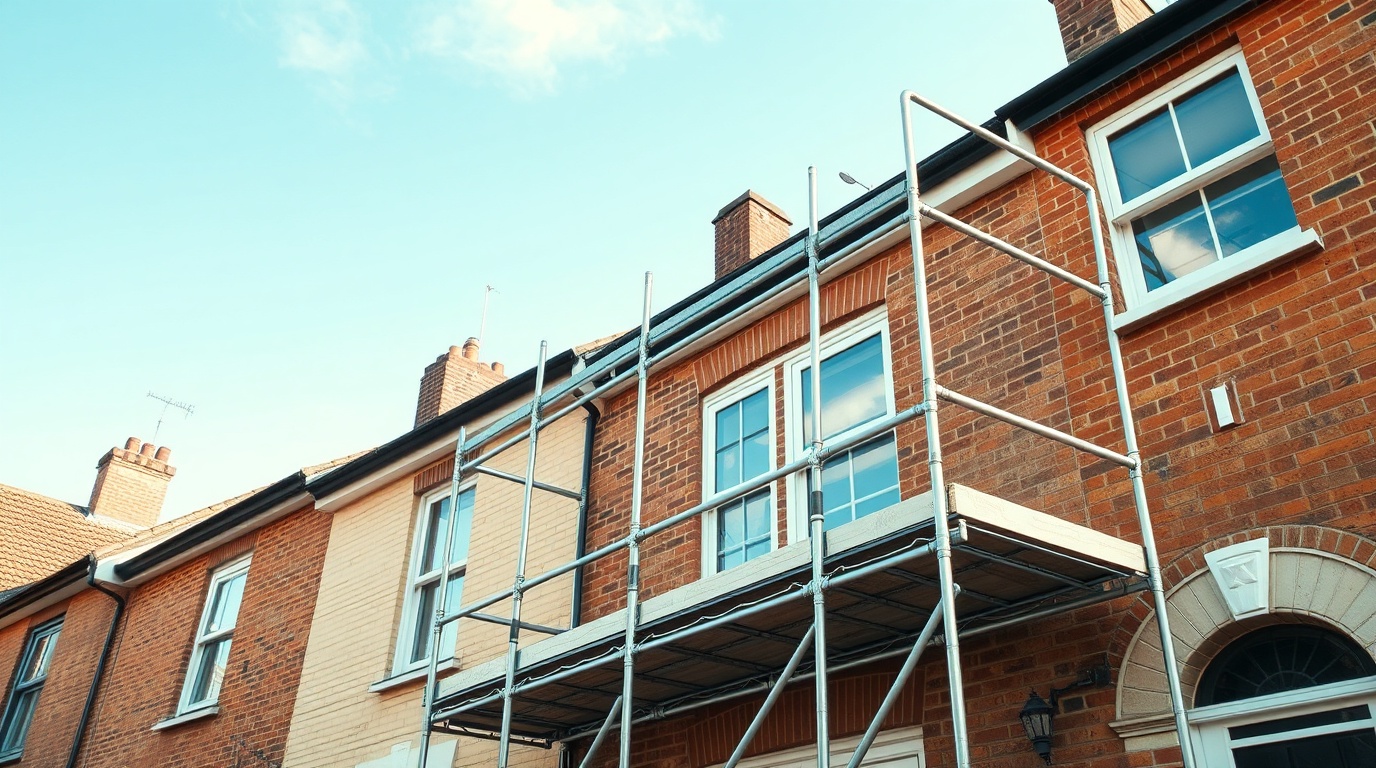
- A full scaffold up the relevant elevation to roof level, since the stack is at the top of the roof.
- A chimney access platform around the stack so the work can be done safely from all sides.
- Edge protection or a crash deck where there is a risk of materials or a person falling across the roof.
- A safe means of lowering brick and rubble, rather than dropping it, to protect people and the roof below.
The size of the structure depends on the height of the roof and the position of the stack. A stack on a tall house, or one set well back from the eaves on a steep roof, needs a larger, more complex scaffold than one on a modest roof. As with chimney repairs, the cost reflects reaching the stack safely, which is the bulk of the access, not the small platform at the top.
| Factor | Effect on access | Notes |
|---|---|---|
| Taller roof | larger scaffold | more height to reach the stack |
| Set-back / steep stack | more complex access | extra platform or protection |
| Internal vs external stack | affects make-good | structural implications differ |
| Restricted base access | harder build | slower, more complex |
Indicative guidance only. The scaffold is priced from the structure needed to reach and work around the stack safely.
Beyond the scaffold: structure and regulations
Chimney removal is not purely a roofing or scaffolding job, and it is worth understanding the wider picture. A chimney breast and stack can be structural, helping to support floors, walls or the roof, and removing part of it may need support designed by a structural engineer and proper make-good so loads are carried safely afterwards.
Removing a chimney is generally notifiable work under the Building Regulations, because of the structural and weatherproofing implications, so it should be carried out so it can be signed off — typically through building control or a competent-person scheme as appropriate. Where only the stack above the roof is removed, the work is smaller than removing the full breast inside the house, but both still need the roof made good correctly. The scaffold supports the at-height part of all this; the structural and regulatory side is a separate, important consideration that a reputable builder will raise before starting. None of it changes the need for safe access — it adds to why the job should be done properly rather than improvised.
How the scaffold fits the project
On a chimney removal, the scaffold is usually a separate cost from the demolition and roofing make-good. It follows the standard model: a one-off erect-and-dismantle charge, with an included hire period that normally covers a job of this length. Because the work — demolition, make-good and any structural support — can take from a few days to longer depending on complexity, keeping the scaffold's weekly element down is mostly about scheduling the trades so the structure is in continuous use.
If other roof work is planned at the same time — a re-roof, ridge repairs or new flashings — it is often sensible to coordinate it with the chimney removal so one scaffold serves both, rather than paying to build access twice. Booking the dismantle promptly once the make-good and any inspection are complete keeps the cost tight. The upfront access cost is set by the roof height and the stack's position; good coordination is what keeps the rest proportionate.
Frequently asked questions
Why does removing a chimney need scaffolding?
Because it combines demolition at the highest point of the roof with making good the roof afterwards — sustained, material-heavy work at height that cannot be done from ladders. A full scaffold to roof level with a chimney access platform gives the stable working area and fall protection the job needs under the Work at Height Regulations 2005.
Is chimney removal just a roofing job?
No. A chimney can be structural, helping to support floors, walls or the roof, so removal may need support designed by a structural engineer and is generally notifiable under the Building Regulations. The scaffold makes the at-height work safe, but the structural and sign-off considerations are a separate, important part of doing it properly.
How big a scaffold is needed to remove a chimney?
It depends on the roof height and where the stack sits. The scaffold runs up the elevation to roof level with a chimney access platform at the top, so a stack on a tall house or a steep, set-back roof needs a larger, more complex structure than one on a modest roof. The cost mostly reflects reaching the stack safely.
Sources & further reading
Figures on this page are typical UK ranges drawn from published sources and depend on your specific job. They are guidance, not a quotation.