The short answer
A new roof — a full re-roof or new build roof — almost always needs a full perimeter scaffold, because stripping and re-covering a roof is sustained work at height with materials being moved around the edges. The scaffold is priced separately from the roofing itself, as a one-off erect-and-dismantle charge plus a weekly hire fee if the job runs past the included period. For a typical house, the scaffold is a meaningful but minority share of the overall re-roof cost, which is dominated by the roofing labour and materials. The figure is driven by the height and number of elevations, the length of roof edge, access, and how long the job takes. A full re-roof keeps the scaffold up for several weeks, so the included hire period usually covers it. Treat figures as indicative and property-specific.
Scaffolding is a near-certain part of any new-roof budget, and it is a separate line from the roofing. Knowing why — and what drives it — helps you read a re-roof quote properly.
Scaffolding for a new roof
- Needed?Almost always — full perimeter scaffold
- Pricedseparately from the roofing
- Share of re-roof costmeaningful but a minority
- Main driversheight, edge length, access, duration
- Legal basisWork at Height Regulations 2005
Why a new roof needs a full scaffold
Re-roofing is one of the most scaffold-dependent jobs in domestic building. Stripping the old covering, replacing battens or boards, and laying the new tiles or slates is sustained work at the roof edge and across the roof, with a constant flow of materials and waste being moved. That cannot be done safely from ladders or a tower.
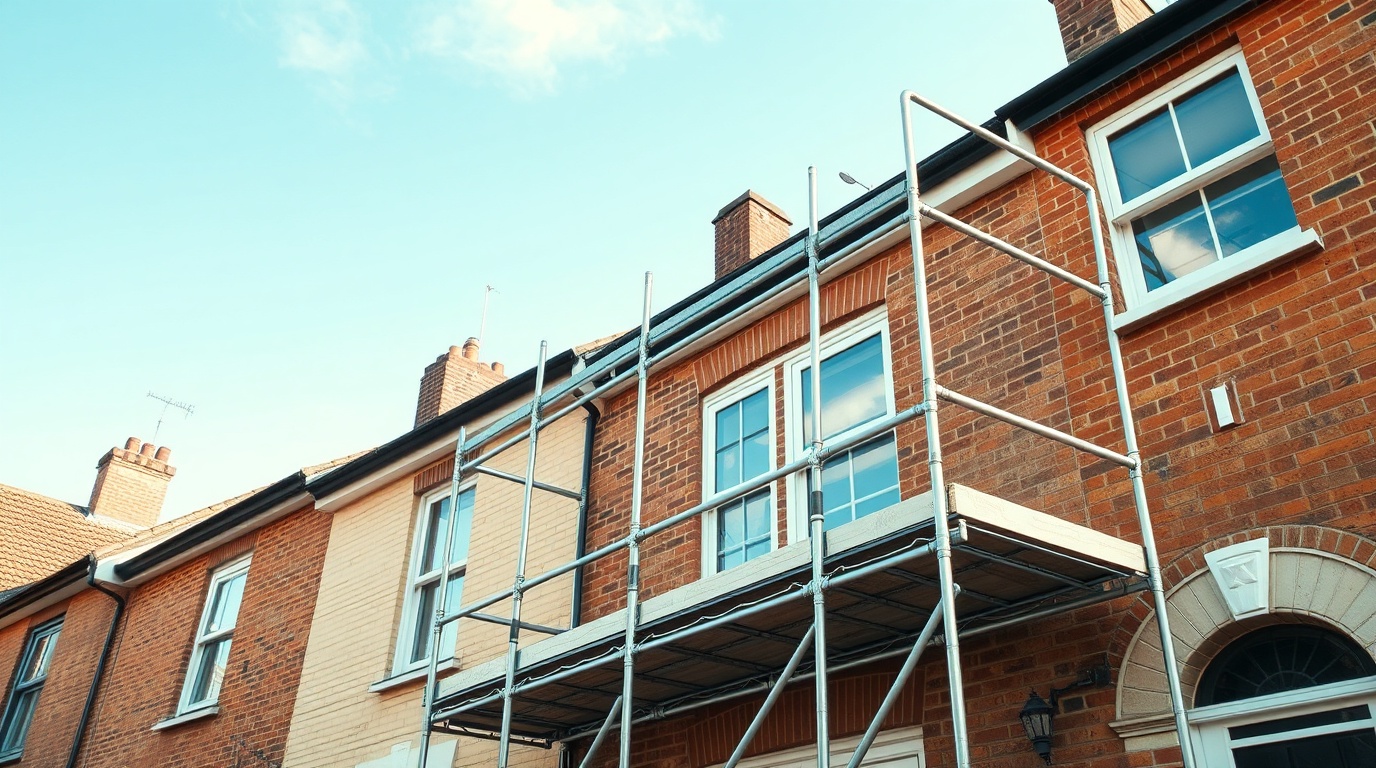
A full re-roof therefore needs a perimeter scaffold around the relevant elevations, giving a stable working platform at eaves level with guard rails and toe boards, and often a loading bay for getting tiles up and rubble down. Where the roof is steep or the work involves the edge for long periods, additional protection such as a guard rail at the roof edge may be added. The scaffold is the fall-protection and access system that makes the whole job possible, which is why it is treated as essential rather than optional on a new roof.
How the scaffold fits into the re-roof budget
On a re-roofing quote, the scaffold is normally a separate line from the roofing labour and materials. Some roofers include it within their overall price; others sub-contract it and pass on the cost. Either way, it is worth seeing the scaffold cost identified, because it is a distinct piece of work with its own basis.
In proportion, the scaffold is usually a meaningful but minority share of a full re-roof. The bulk of a re-roof cost is the roofing labour and the covering materials — tiles or slates, battens, membrane, flashings — plus any structural repairs found once the roof is stripped. The scaffold supports all of that but is not the largest element. Because a re-roof keeps the scaffold up for several weeks, the included hire period in the scaffold quote usually covers the duration, so extra weekly fees often do not apply unless the job overruns significantly.
| Cost element | Role in a re-roof | Relative size |
|---|---|---|
| Roofing labour | stripping and re-covering | large |
| Covering materials | tiles/slates, battens, membrane | large |
| Scaffolding | access and fall protection | meaningful minority |
| Structural repairs | if found on strip | variable |
| Waste removal | old covering disposal | moderate |
Indicative proportions for guidance. Scaffolding is essential but usually a minority of total re-roof cost.
What drives the scaffolding figure
The scaffold cost for a new roof is set by the same factors as any scaffold, applied to the roof's footprint:
- Height and storeys: a roof on a three-storey house needs more scaffold to reach than a bungalow.
- Number of elevations and edge length: a roof that needs scaffold on all sides costs more than one accessible from a single elevation.
- Roof complexity: hips, valleys, dormers and varying ridge heights add structure.
- Access and ground: restricted side access, conservatories or sloping ground add complexity.
- Loading bay and edge protection: getting materials up and protecting the edge can add to the basic scaffold.
- Public-land licence: if the scaffold stands on a pavement, the council licence adds cost.
Because of these variables, the scaffold for a new roof is always priced from a site assessment, alongside the roofing quote.
Getting the scaffold and roofing to work together
The practical aim on a re-roof is for the scaffold and roofing to be well coordinated, so the structure is up for as little time as the work genuinely needs. Because a re-roof usually falls within the scaffold's included hire period, the cost is largely fixed once the structure is built; the risk is an overrun from weather, material lead times, or structural problems found on stripping.
Two habits help. First, plan for the unexpected: re-roofs commonly reveal rotten timbers or failed flashings once the covering is off, so building some contingency into the timeline avoids the scaffold sitting up while extra work is arranged. Second, ensure the roofer and scaffolder are aligned on dates, so the scaffold goes up just before the roofing starts and comes down promptly once the work and any final inspection are complete. A well-sequenced re-roof keeps the scaffold's weekly element to a minimum, with the upfront build cost — fixed by the roof's height and footprint — as the main figure.
Frequently asked questions
Do you always need scaffolding for a new roof?
Almost always for a full re-roof. Stripping and re-covering a roof is sustained work at height with materials moving constantly, which needs a full perimeter scaffold with guard rails for safe access and fall protection. It cannot be done safely from ladders. Very minor, brief roof tasks are a different matter, but a new roof needs proper scaffolding.
Is scaffolding included in a re-roof quote?
Sometimes within the roofer's overall price, sometimes as a separate sub-contracted line. Either way it is worth seeing the scaffold cost identified, because it is distinct work. Scaffolding is usually a meaningful but minority share of the total re-roof cost, which is dominated by roofing labour and materials.
How long does the scaffold stay up for a new roof?
Typically several weeks, covering the strip and re-cover. This usually falls within the scaffold quote's included hire period, so extra weekly fees often do not apply unless the job overruns significantly — for example if weather or structural repairs found on stripping extend the timeline.
Sources & further reading
- HSE — roof work
- Checkatrade — scaffolding cost guide
- NASC — National Access and Scaffolding Confederation
Figures on this page are typical UK ranges drawn from published sources and depend on your specific job. They are guidance, not a quotation.