The short answer
A loft conversion needs scaffolding for its roof works, which are usually the most access-intensive part of the project. Building a dormer, cutting in rooflights, altering the roof structure, and weatherproofing all involve sustained work at and through the roof, so a scaffold to the relevant elevations is required — typically a full-height structure with a working platform, guard rails and often a loading bay for materials. Because a loft conversion is a longer project than a simple roof repair, the scaffold tends to stay up for several weeks or more, so the included hire period and any weekly fees both matter. The scaffold is a separate cost from the conversion and a minority share of the total. The Work at Height Regulations 2005 apply throughout. Figures are indicative and depend on the design and property.
A loft conversion is mostly an inside job, but it starts and ends with roof works — and those need proper access. The scaffold is the platform the whole roof side of the project relies on.
Scaffolding for a loft conversion
- Needed?Yes — for the roof works
- Drives the scaffolddormers, rooflights, roof alterations
- Typical durationseveral weeks or more
- Cost shareminority of the conversion
- Legal basisWork at Height Regulations 2005
Why a loft conversion needs scaffolding
Although much of a loft conversion happens inside the roof space, the parts that change the roof itself are significant work at height. Depending on the design, the roof works can include building a dormer (opening up the roof and framing a new structure), cutting in rooflights such as Velux windows, altering or strengthening the roof structure, and re-covering and weatherproofing where the roof has been changed.
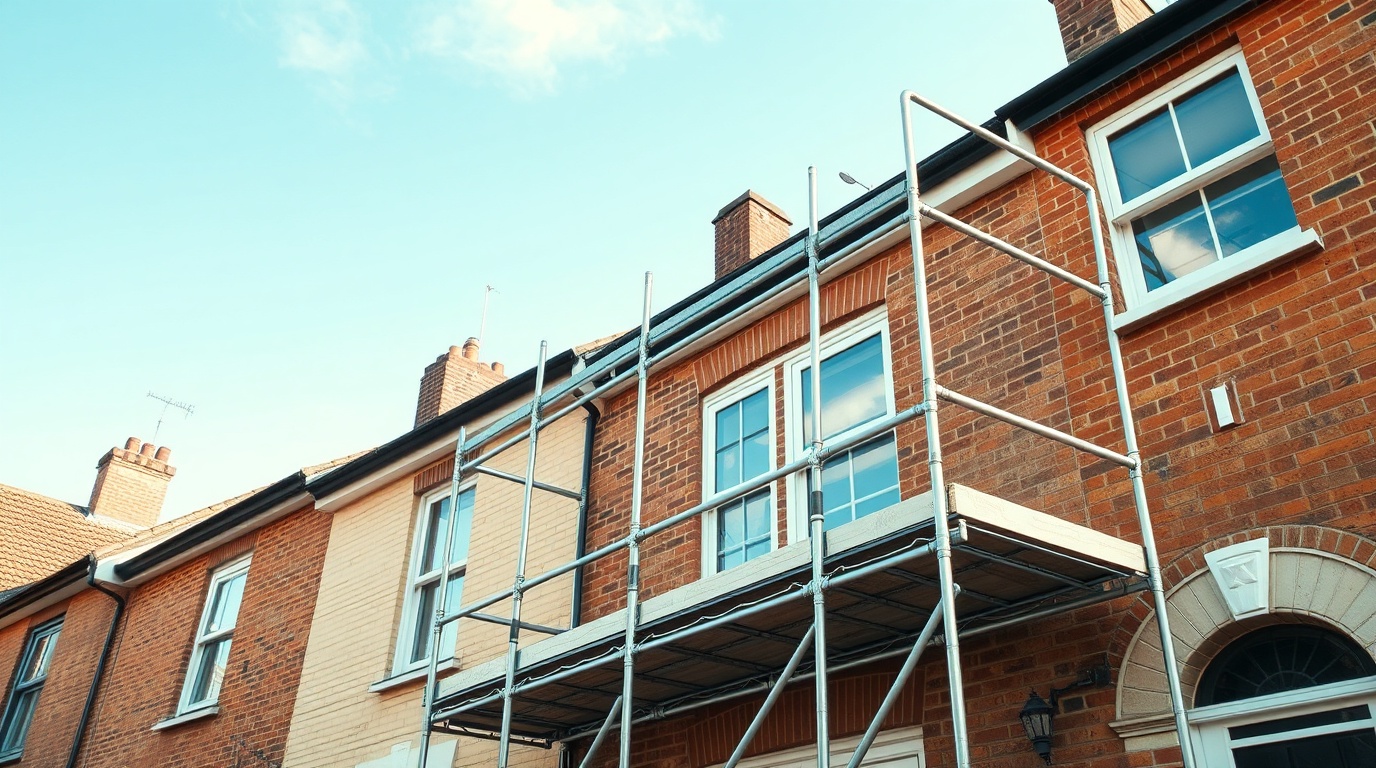
All of this is sustained, material-heavy work at and through the roof, which needs a scaffold to the relevant elevations. The scaffold provides a working platform with guard rails and edge protection, a safe route for workers and materials, and often a loading bay for getting timber, tiles and a new dormer's components up to roof level. For a rear dormer conversion, the scaffold is usually concentrated on the rear elevation; a more complex design across multiple roof faces needs a larger structure.
What the scaffold has to support
The scaffold for a loft conversion has to cope with more than basic access, because the roof works can be substantial:
- Dormer construction: opening the roof, framing the dormer, and cladding or tiling it — heavy, multi-stage work needing a stable platform and materials staging.
- Rooflight installation: cutting openings and fitting and flashing the windows from outside.
- Structural alterations: new or strengthened rafters, ridge beams or purlins, sometimes craned or manhandled into place.
- Weatherproofing: new membrane, battens, tiles or slates, and flashings around the changed roof.
- Material handling: a loading bay so the steady flow of materials does not rely on ladders.
Because the roof is genuinely altered rather than just accessed, the scaffold is a working structure for the duration, not a brief access aid. Its size and complexity follow the conversion design.
| Conversion type | Typical scaffold | Notes |
|---|---|---|
| Rooflight (Velux) conversion | scaffold to one elevation | lighter roof works |
| Rear dormer | full scaffold to rear elevation | dormer build needs staging |
| Multiple dormers / faces | larger multi-elevation scaffold | more structure |
| Complex / hip-to-gable | substantial scaffold | structural roof changes |
Indicative guidance only. The scaffold scales with the design — rooflight conversions need less than full dormers.
How long it stays up and what it costs
A loft conversion is a longer project than a simple roof repair, often running for weeks from opening the roof to completing the external works. The scaffold typically stays up for the roof-works phase and a good part of the build, so both the included hire period and any weekly fees beyond it are worth attention.
In cost terms, the scaffold is a separate line from the conversion and a minority share of the total. A loft conversion's cost is dominated by the structural work, the dormer or rooflights, insulation, the internal fit-out (stairs, plastering, electrics, a bathroom), and Building Regulations compliance. The scaffold supports the roof side but is not the largest element. Because the project is long, an overrun can extend the scaffold hire, so coordinating the roof works so the scaffold is only up while needed — and booking the dismantle once the external works are complete — keeps the access cost proportionate.
Safety and the wider project
Loft-conversion roof works are work at height under the Work at Height Regulations 2005, and the scaffold is the means of providing a safe place of work with fall protection. It should be erected by competent, trained scaffolders (CISRS) to a recognised standard and inspected before use and at suitable intervals. HSE guidance favours collective protection such as a guard-railed platform.
It is worth remembering that the scaffold is just the access enabler for a project with much wider requirements. A loft conversion is notifiable under the Building Regulations and may need planning permission depending on the design and whether it falls within permitted development, plus a structural design for the new floor and roof alterations and, where neighbours are affected, a Party Wall agreement. The scaffold makes the roof works safe; the conversion as a whole is a substantial, regulated project. A reputable builder will arrange suitable access as a matter of course and treat it as part of doing the job properly.
Frequently asked questions
Do all loft conversions need scaffolding?
Any loft conversion that alters the roof — a dormer, rooflights, or structural changes — needs scaffolding for the roof works, because those involve sustained work at and through the roof. A lighter rooflight conversion needs less scaffold than a full dormer, but some access to the relevant elevation is required in nearly all cases.
How long does scaffolding stay up for a loft conversion?
Usually several weeks or more, covering the roof-works phase and often part of the build. Because a loft conversion is a longer project than a simple repair, both the included hire period and any weekly fees matter. Coordinating the works and booking the dismantle once the external works finish keeps the cost down.
Is scaffolding a big part of loft conversion cost?
No — it is a minority share. A loft conversion's cost is dominated by structural work, the dormer or rooflights, insulation, the internal fit-out and Building Regulations compliance. The scaffold supports the roof side but is not the largest element, and is usually a separate line on the quote.
Sources & further reading
Figures on this page are typical UK ranges drawn from published sources and depend on your specific job. They are guidance, not a quotation.