The short answer
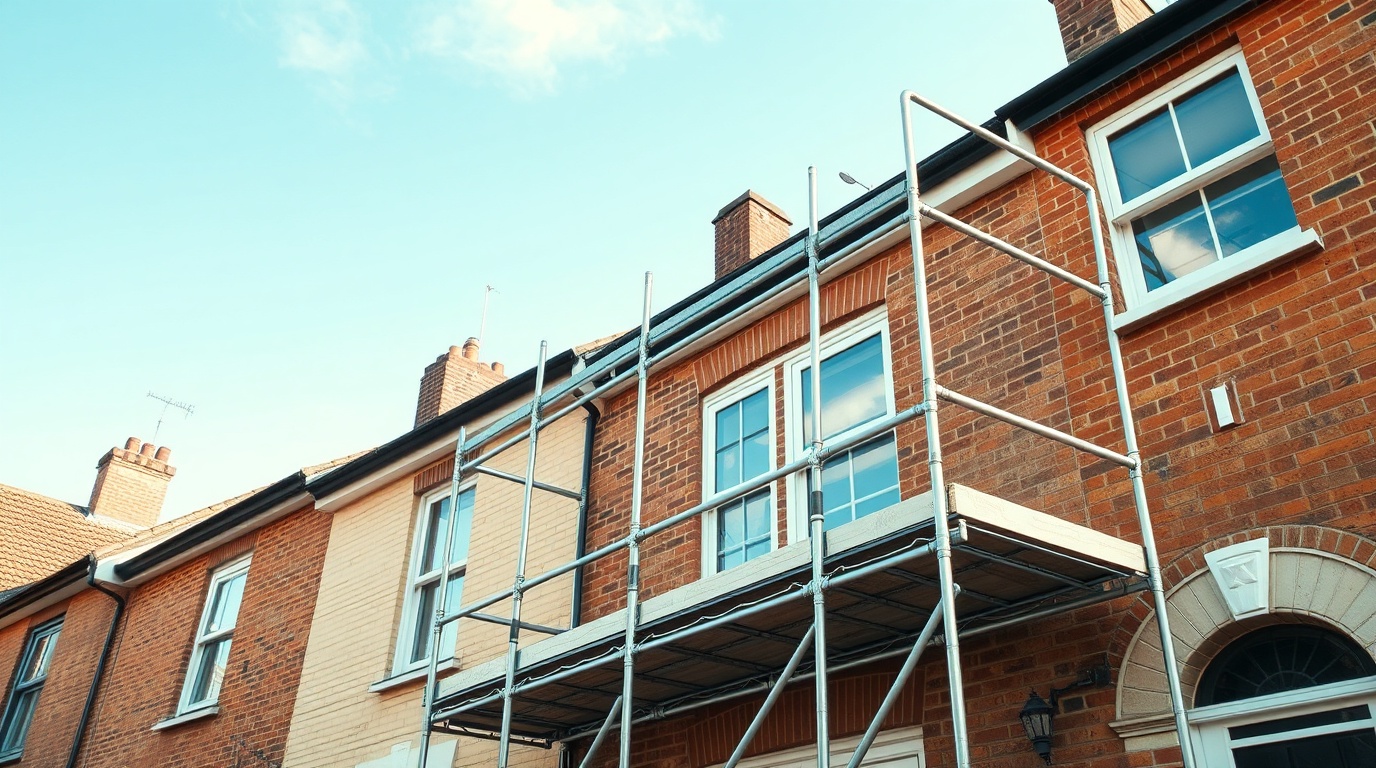
Scaffolding for guttering work in the UK typically costs between £500 and £1,200 per elevation, with a straightforward two-storey run often around £600–£900. Because gutters run along the roof edge, the scaffold usually only needs to reach eaves level rather than the full roof, which keeps it lower than chimney or roof scaffolding. For short, low or accessible runs, a mobile scaffold tower or other access equipment may be enough and cost much less. The price covers the erect, a hire period and the dismantle. Whether scaffolding or a tower is appropriate depends on the height, the length of the run and the nature of the work, all under the Work at Height Regulations 2005.
Guttering sits at the roof edge, so the access it needs is often simpler than roof or chimney work. The sections below cover typical costs, when a tower may do instead, and the factors that move the price.
At a glance
- Per elevation~£500–£1,200
- Common two-storey run~£600–£900
- ReachesEaves, not full roof
- Small runsTower may suffice
- Legal basisWork at Height Regs 2005
Typical guttering scaffold costs
Guttering work, whether clearing, repairing, or replacing fascias, soffits and gutters, needs access along the roof edge. Because the platform only has to reach the eaves rather than the ridge or chimney, the scaffold is usually less extensive than for roof or chimney jobs, so costs sit at the lower end of the domestic range. The figure depends mainly on the height of the property and the length of the run. The ranges below are indicative.
| Scope | Indicative UK cost | Notes |
|---|---|---|
| Short two-storey run | £500–£800 | Single accessible elevation |
| Full two-storey elevation | £700–£1,000 | Longer eaves run |
| Three-storey property | £900–£1,200+ | Extra lift to reach eaves |
| Whole-house guttering | £1,500–£3,000 | All elevations scaffolded |
| Small / low run (tower) | £40–£100/week | Where a tower is suitable |
Indicative figures for guidance only. Prices vary by height, run length, access and hire.
When you need a scaffold and when a tower will do
Not every guttering job needs a full scaffold. For a short, low or easily accessed section, a mobile scaffold tower, moved along the wall as work progresses, may provide a safe enough platform at far lower cost. This suits clearing a stretch of blocked gutter or replacing a single fascia board on an accessible elevation.
A full erected scaffold becomes the sensible choice when the run is long, the property is two storeys or more, or the work involves replacing fascias, soffits and gutters along a whole elevation, where a continuous, stable platform with edge protection lets the installer work safely and efficiently. Three-storey properties almost always need a scaffold, as a tower stretched to that height is neither stable nor practical. The deciding factors are height, run length and how long the worker will be at height, all assessed under the Work at Height Regulations 2005, which require a suitable and safe means of access for any work above ground level.
What changes the price
Within the typical range, the same practical factors apply as to any scaffold. Height is the main one: reaching the eaves of a three-storey house needs an extra lift compared with a two-storey, adding materials and labour. Run length sets how much tube and board is needed, so a long elevation costs more than a short section. Access matters where the gutter sits above a conservatory, extension or sloping ground, since the scaffold must be designed around the obstruction.
Hire length is usually short for guttering, often just a week or two, which helps keep the cost down compared with render or re-roof jobs. A local authority scaffolding licence applies if the scaffold stands on a public pavement, for example on a terrace fronting the street, and is charged separately. As with all scaffolding, regional rates vary. The lowest-cost arrangement is a short, low, accessible run, sometimes a tower rather than a scaffold; the highest is a full-house eaves wrap on a tall property. Matching the access to the actual work keeps the bill proportionate.
Combining guttering with other roof-edge work
Because guttering scaffolding reaches the eaves, the same access often suits several related jobs, and combining them can make the access cost go further. Fascias and soffits sit immediately behind and below the gutter, so replacing them is commonly done at the same time as new guttering, all from one eaves-level platform. The lower courses of roof tiles, the felt or membrane at the eaves, and the leading edge of the roof are also within reach, so minor roof-edge repairs can be folded in. If any of these are due, having them done while the scaffold is already up spreads that cost across more than one task rather than paying for access twice.
The opposite consideration applies just as strongly: do not over-specify access for a small job. Clearing a single blocked downpipe or replacing one short section of gutter on an accessible elevation may need only a tower or other access equipment rather than a full scaffold, and erecting an extensive scaffold for a tiny task inflates the cost unnecessarily. The sensible approach is to look at the whole picture of what needs doing at roof-edge level, decide whether the work genuinely justifies a full eaves scaffold or a lighter form of access, and then plan the trades around a single hire where it makes sense. Whatever access is used must be suitable and safe under the Work at Height Regulations 2005, and an erected scaffold must be signed off before first use.
Weighing scaffold cost against the size of the job
Guttering work spans a wide range, from clearing leaves out of a single downpipe to replacing the entire run around a house, and the right access, and its cost relative to the job, varies just as much. For a quick clear or a small repair on a low, accessible section, a full scaffold can cost more than the work itself, which is why lighter options such as a properly used mobile tower are sometimes more proportionate for short, low, one-spot tasks on firm level ground. For a full gutter replacement around a two or three-storey house, though, an erected scaffold gives a safe, continuous platform along the roof edge that makes the work quicker, safer and tidier than ladders, and the access cost is a reasonable share of the overall project.
The judgement, as ever, is to match the access to the work and to the height. Working at the roof edge brings the same fall risks as any work at height, so the Work at Height Regulations 2005 apply whether the job is large or small, and the access has to be genuinely safe rather than simply cheap. Where guttering coincides with other roof-edge jobs such as fascias, soffits or a roof repair, sharing one scaffold across all of them within a single hire spreads the access cost and is usually far more economical than arranging separate access for each. Thinking about the scaffold cost in proportion to the whole job, rather than in isolation, is the clearest way to decide what level of access a particular piece of guttering work justifies.
Frequently asked questions
Do I need scaffolding to replace guttering?
For a full two-storey or taller run, usually yes, as a stable platform along the eaves is needed to work safely under the Work at Height Regulations 2005. A short, low or single-section job may be reachable with a tower or other access equipment instead.
Is guttering scaffolding cheaper than roof scaffolding?
Often, because the platform only needs to reach the eaves rather than the full roof height or the chimney. That usually means fewer lifts and less material than chimney or full-roof scaffolding, so the cost sits at the lower end of the domestic range.
Can a window cleaner's pole be used instead?
For clearing a gutter from the ground, telescopic clearing systems exist, but for repairs or replacing fascias and soffits the worker needs to be at the eaves, which requires a safe platform such as a scaffold or, for small jobs, a tower.
Sources & further reading
Figures on this page are typical UK ranges drawn from published sources and depend on your specific job. They are guidance, not a quotation.