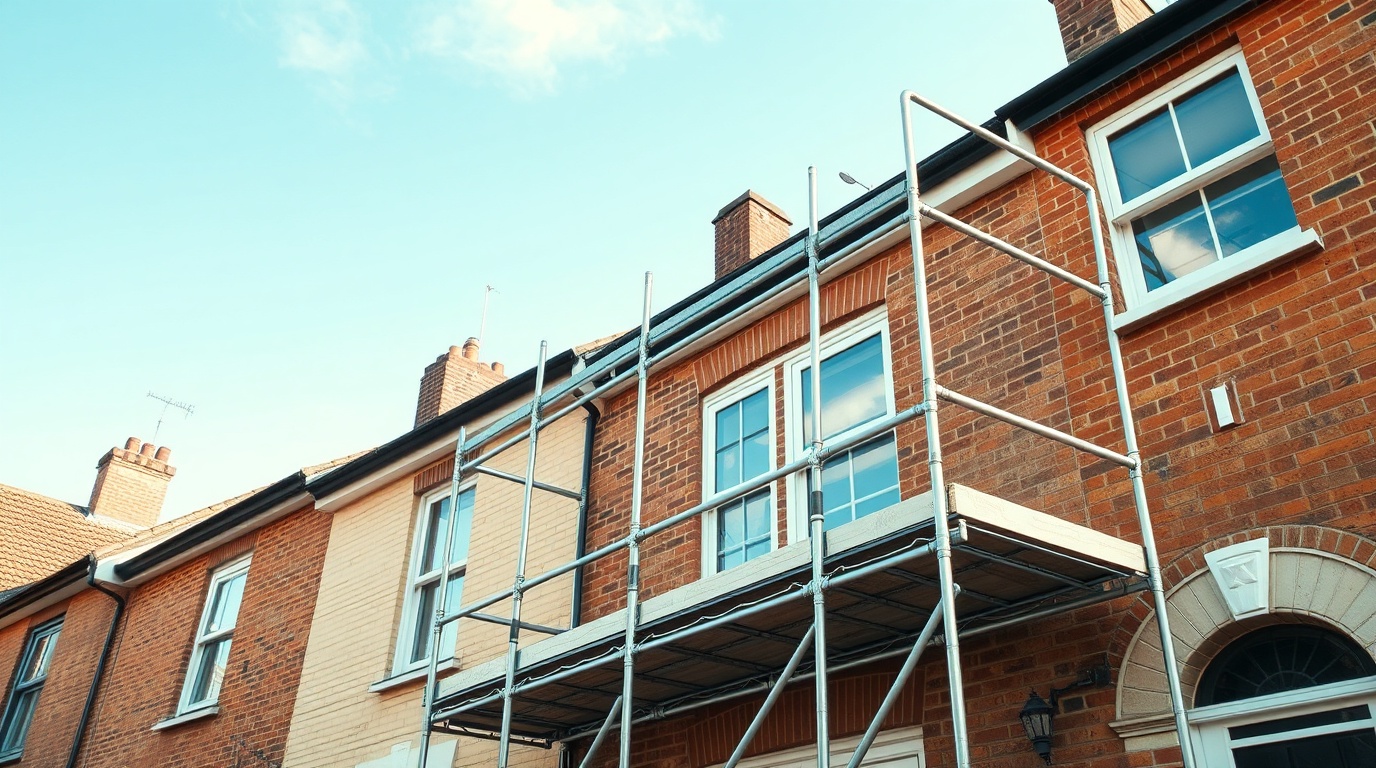
The short answer
No, scaffolding itself does not normally need planning permission. Scaffolding is a temporary structure erected to carry out work, and as a temporary support it generally falls outside the planning regime. What it often does need is a highway licence from the council under the Highways Act 1980, if it stands on or over the public pavement or road — and that is a different permission from planning. The picture changes around listed buildings and conservation areas: while the scaffold may still not need planning permission, the underlying works it supports can require listed building consent or planning permission, and you should check before starting. So the usual answer is: scaffolding equals a possible highway licence, not planning permission, but confirm the position for the actual works with your local planning authority.
There is frequent confusion between two separate council permissions — planning permission and a highway scaffolding licence. They answer different questions, and scaffolding usually engages one but not the other.
Scaffolding and planning at a glance
- Scaffolding itselfTemporary — not normally planning
- Highway licenceNeeded if on/over the highway
- Listed buildingsCheck the works, not the scaffold
- Conservation areasUnderlying works may be restricted
- Confirm withLocal planning authority + highways team
Two different permissions, two different questions
The reason scaffolding rarely needs planning permission is that planning is concerned with permanent development and changes of use — building an extension, altering a roofline, changing what a property is used for. Scaffolding is none of those things; it is a temporary access structure that comes down once the job is finished. As a short-lived support rather than a permanent change to the land or building, it generally falls outside what planning control regulates.
A highway scaffolding licence answers a completely different question: is it acceptable to occupy part of the public highway with this structure for a set period? That permission comes from the local highway authority under the Highways Act 1980 and is about pedestrian and traffic safety, not about the appearance or use of your property. The two are easy to confuse because both involve 'the council', but they are separate processes handled by separate teams.
| Permission | What it controls | When it applies to scaffolding |
|---|---|---|
| Planning permission | Permanent development / use | Rarely — scaffolding is temporary |
| Highway licence | Occupying the public highway | When on or over pavement/road |
| Listed building consent | Works to a listed building | If the underlying works need it |
| Conservation area controls | Character of the area | Can restrict the underlying works |
General guidance — confirm the position for your specific works with the local planning authority. Source: Highways Act 1980; planning guidance.
When listed buildings and conservation areas change things
The clearest exception is not the scaffold but what it is there to support. If your property is a listed building, the works you are carrying out may require listed building consent regardless of the scaffolding. Similarly, in a conservation area, certain works that affect the character of the area can be restricted or need permission. The scaffold may still be exempt, but it is the job behind it that matters — repointing, re-roofing, replacing windows or altering a façade can all engage these controls on a listed or protected property.
There can also be conditions on how scaffolding is fixed to a sensitive building, to avoid damage to historic fabric, which a conservation officer may want to discuss. The safe approach is to separate the two questions: first, does the work itself need any planning or listed building consent; second, does the scaffold need a highway licence. Answering both before you start avoids a situation where the scaffold is up but the underlying works should not have begun.
Other permissions people confuse with planning
Because 'do I need permission?' is a broad worry, it helps to separate the different permissions that can surround a scaffolding job, only one of which is planning. Confusing them is the source of most uncertainty:
- Highway licence: council permission to occupy the public pavement or road with the scaffold — needed when the structure is on or over the highway, and entirely separate from planning.
- Listed building consent: required for works that affect the special character of a listed building; it concerns the works, not the scaffold itself.
- Conservation area controls: certain works in a conservation area can be restricted; again this bites on the works rather than the temporary access structure.
- Building regulations: these govern the technical standard of building work and are different again from planning permission, though larger projects can engage both.
For scaffolding specifically, the realistic checklist is short: the scaffold almost never needs planning permission, it often needs a highway licence, and any special consents depend on whether the building is listed or protected and what the works are. Keeping these in separate boxes stops a homeowner from either over-worrying about planning for a routine repair, or under-checking the consents that genuinely apply to a listed property. If you are ever unsure which box a particular requirement falls into, the council can point you to the right team, because planning, highways, conservation and building control are usually handled separately.
How to be sure before you start
Because the two permissions are handled separately, a short, deliberate check at the planning stage avoids most problems. For a typical homeowner project the sequence is:
- Decide what works you are doing and confirm whether they need planning permission or listed building consent — this is where the real planning question usually lies.
- Establish whether the scaffold will stand on or over the highway; if so, a highway licence is needed and the scaffolder normally arranges it.
- If the property is listed or in a conservation area, contact the council's conservation officer early about both the works and how the scaffold will be fixed.
- Keep the planning and highways enquiries separate, as they go to different council teams and have different rules.
For the large majority of repair, maintenance and minor improvement jobs, the conclusion is reassuringly simple: the scaffold needs no planning permission, and the only council permission in play is a highway licence if it occupies public land. The cases that need more care are listed buildings, conservation areas, and larger projects where the underlying works themselves require consent. Confirming the position with the local planning authority before work starts is the reliable way to know which of these applies to you, because the rules can vary locally and change over time.
Frequently asked questions
Does scaffolding ever need planning permission?
Scaffolding itself is a temporary structure and is not normally subject to planning permission. The planning question, where there is one, usually concerns the underlying works it supports — for example on a listed building — rather than the scaffold.
What is the difference between a scaffolding licence and planning permission?
A highway scaffolding licence is permission to occupy the public pavement or road and comes from the highway authority. Planning permission concerns permanent development or changes of use. Scaffolding usually needs the former, not the latter.
Do I need consent for scaffolding on a listed building?
The scaffold may not need planning permission, but works to a listed building can require listed building consent, and there may be conditions on how the scaffold is fixed to protect historic fabric. Contact the council's conservation officer before starting.
Sources & further reading
- GOV.UK — apply for a licence to put up scaffolding or a hoarding
- GOV.UK — planning permission overview
Figures on this page are typical UK ranges drawn from published sources and depend on your specific job. They are guidance, not a quotation.